
The short answer
The best winery websites pair a clear brand story with an obvious next step. Visitors can buy a bottle, join the wine club or book a tasting in a tap or two. Our 12 picks for 2026 are listed below, each with what it does best.
How we chose these winery websites
In October 2026 we reviewed more than 25 winery websites on desktop and mobile. We focused on the pages that sell: the homepage, wine club, visit page and online store. Daylight has no ties to any of these wine businesses, and details reflect each site as of October 2026.
What do the best winery websites have in common?
Great photos are standard for wine brands. The best wine websites stand out for how fast they turn interest into an order or a booking. Six patterns stood out, and they match the goals of our own winery website design work.
- One focused story, such as Ridge’s single vineyard photo and one link to shop.
- Shop and Book a Tasting within reach on a phone.
- Club pages that show bottles, shipments, price and benefits together.
- Visit pages with the price, length and a booking link for each experience.
- A consistent brand through checkout, with guest or express payment.
- Fast mobile pages that serve phones a still image instead of heavy video.
The 12 best winery websites in 2026
These winery website examples span Oregon, Washington and California, from family estates to well-known Napa Valley names.
1. Sokol Blosser, Dundee Hills, Oregon
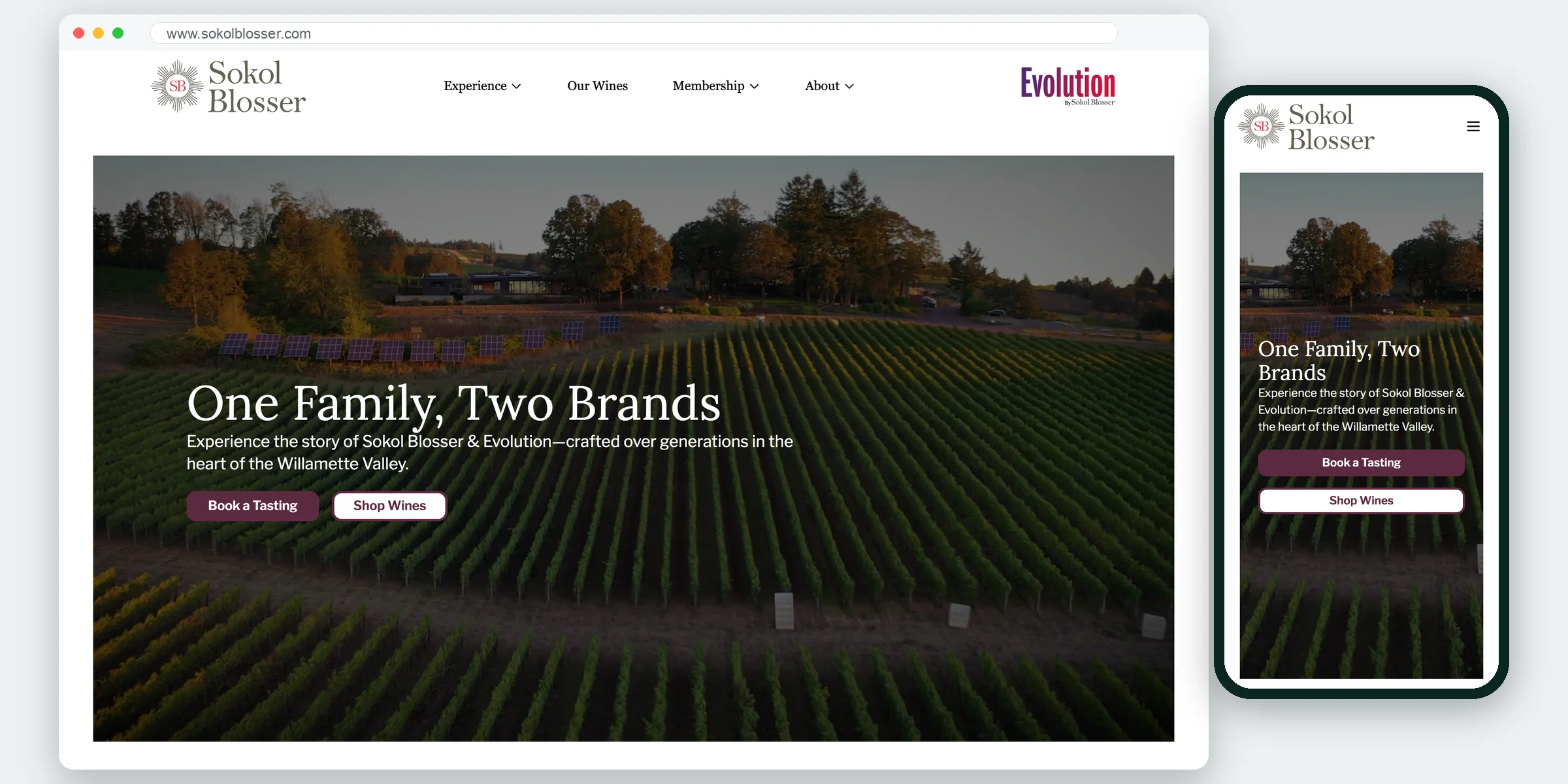
Sokol Blosser opens with its family story, “One Family, Two Brands.” Book a Tasting and Shop Wines sit right below, visible on a phone without scrolling. The Cellar Club page shows the average shipment price for each of its five memberships.
Key takeaway: Put your two most important actions right under the homepage headline.
2. Justin, Paso Robles, California
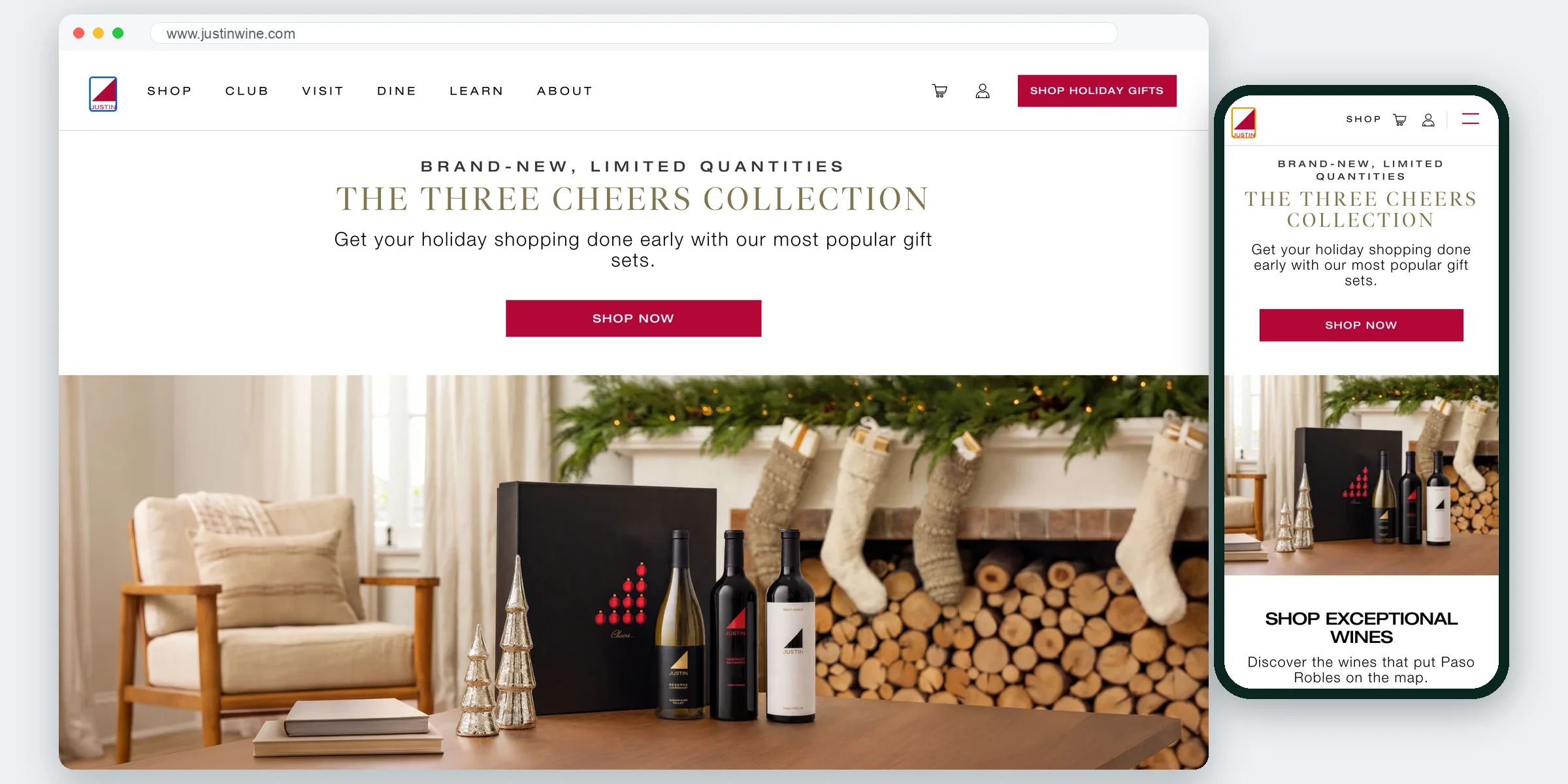
Justin’s homepage works like a seasonal storefront with one Shop Now button. Its wine club page was the strongest we reviewed. One table compares the 4, 6 and 12 bottle memberships on bottles, wine shipping, free tastings and savings.
Key takeaway: Compare club tiers in one table so visitors can choose without calling.
3. Ram’s Gate Winery, Sonoma, California
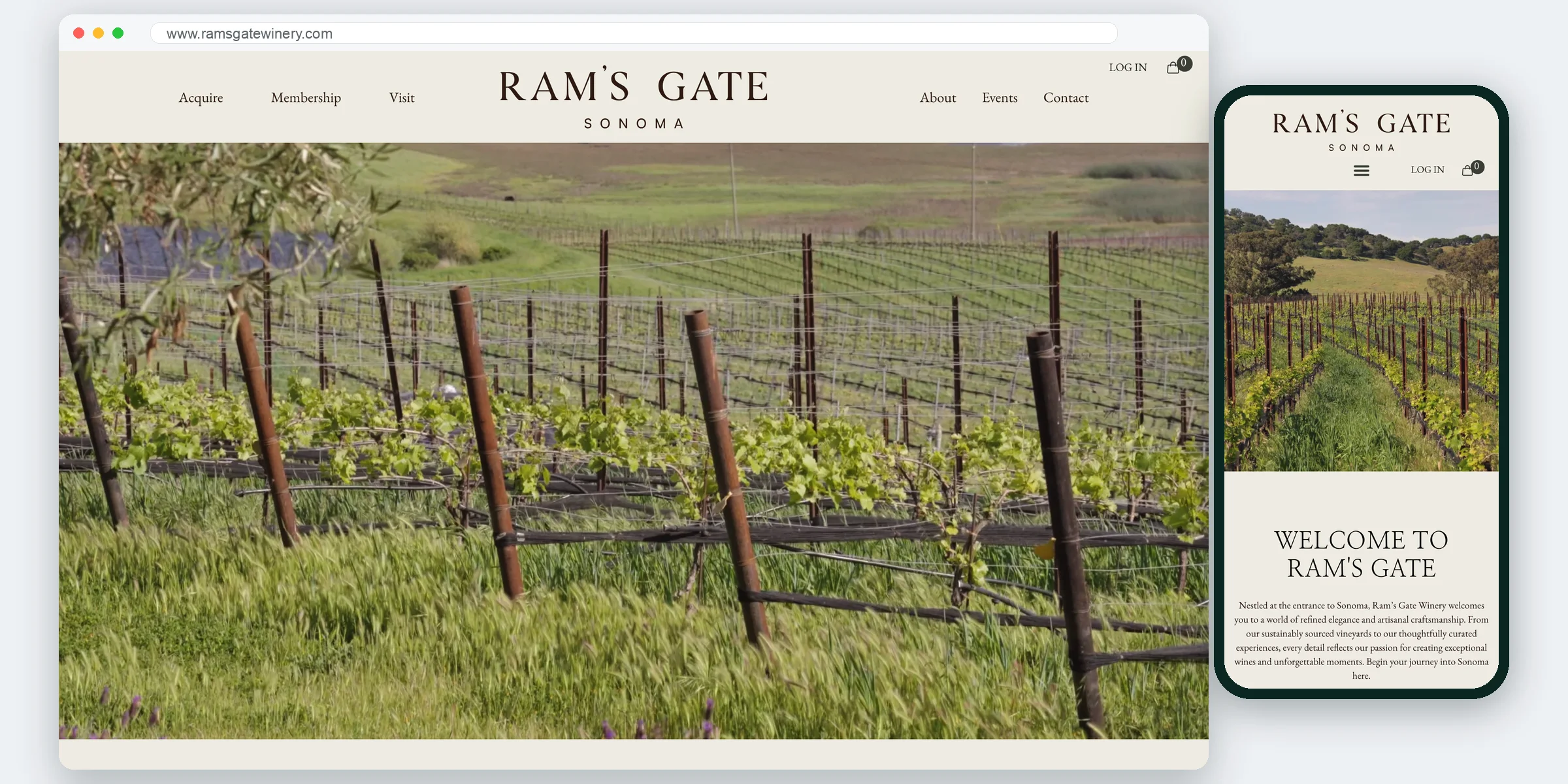
Ram’s Gate pairs a quiet serif wordmark with slow vineyard film. Its membership page lists club shipments per year, price range, savings and guest passes. It also names the states it can’t ship to.
Key takeaway: Publish shipping limits on the club page, before anyone joins.
4. L’Ecole No 41, Walla Walla Valley, Washington
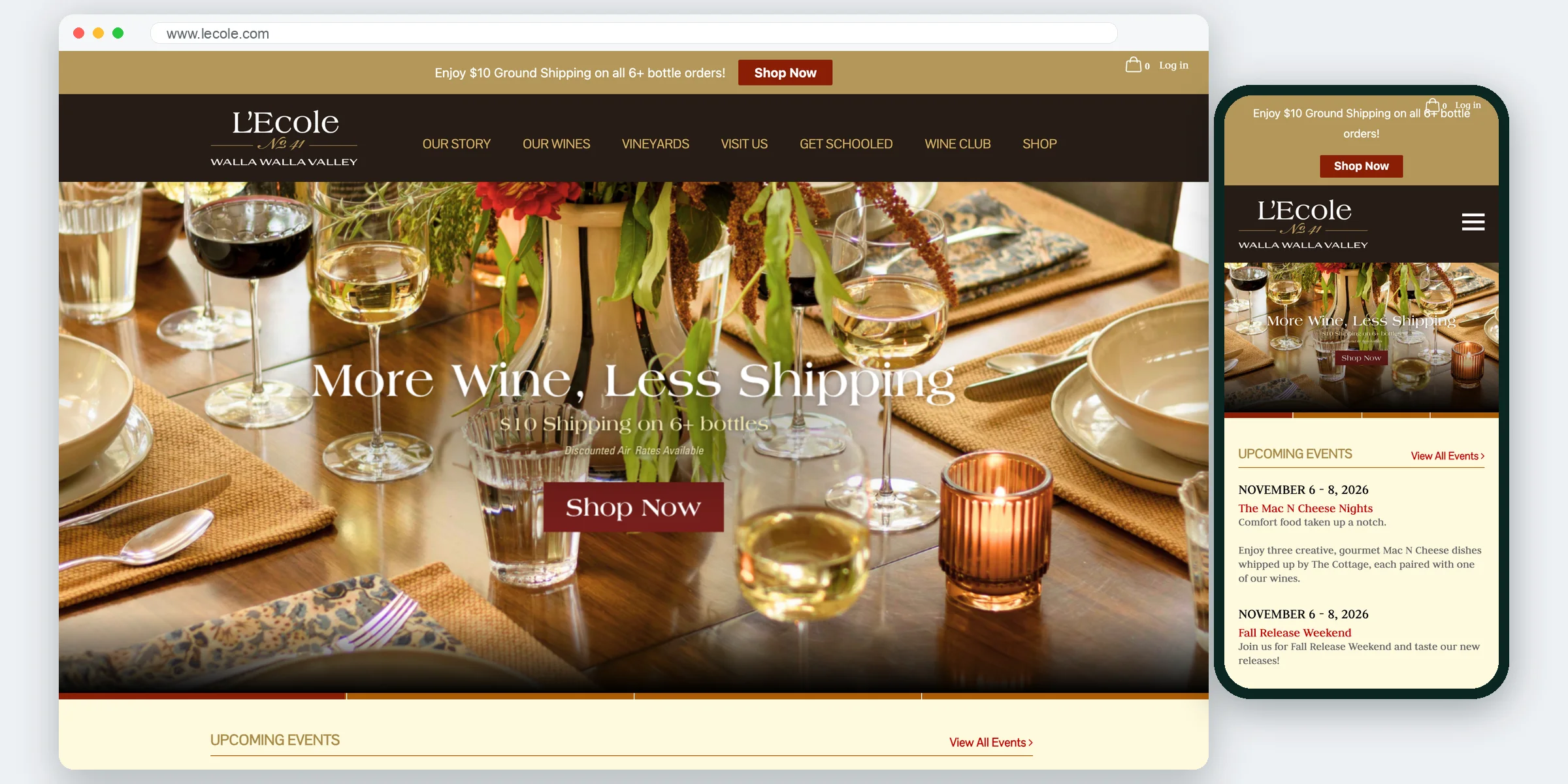
L’Ecole No 41 gives customers a reason to return. A shipping offer sits at the top of the homepage, with an events calendar below. The club page compares three levels on bottles, savings, shipping and free tastings.
Key takeaway: Feature upcoming events on the homepage to bring members back.
5. HALL Wines, Napa Valley and Palm Springs
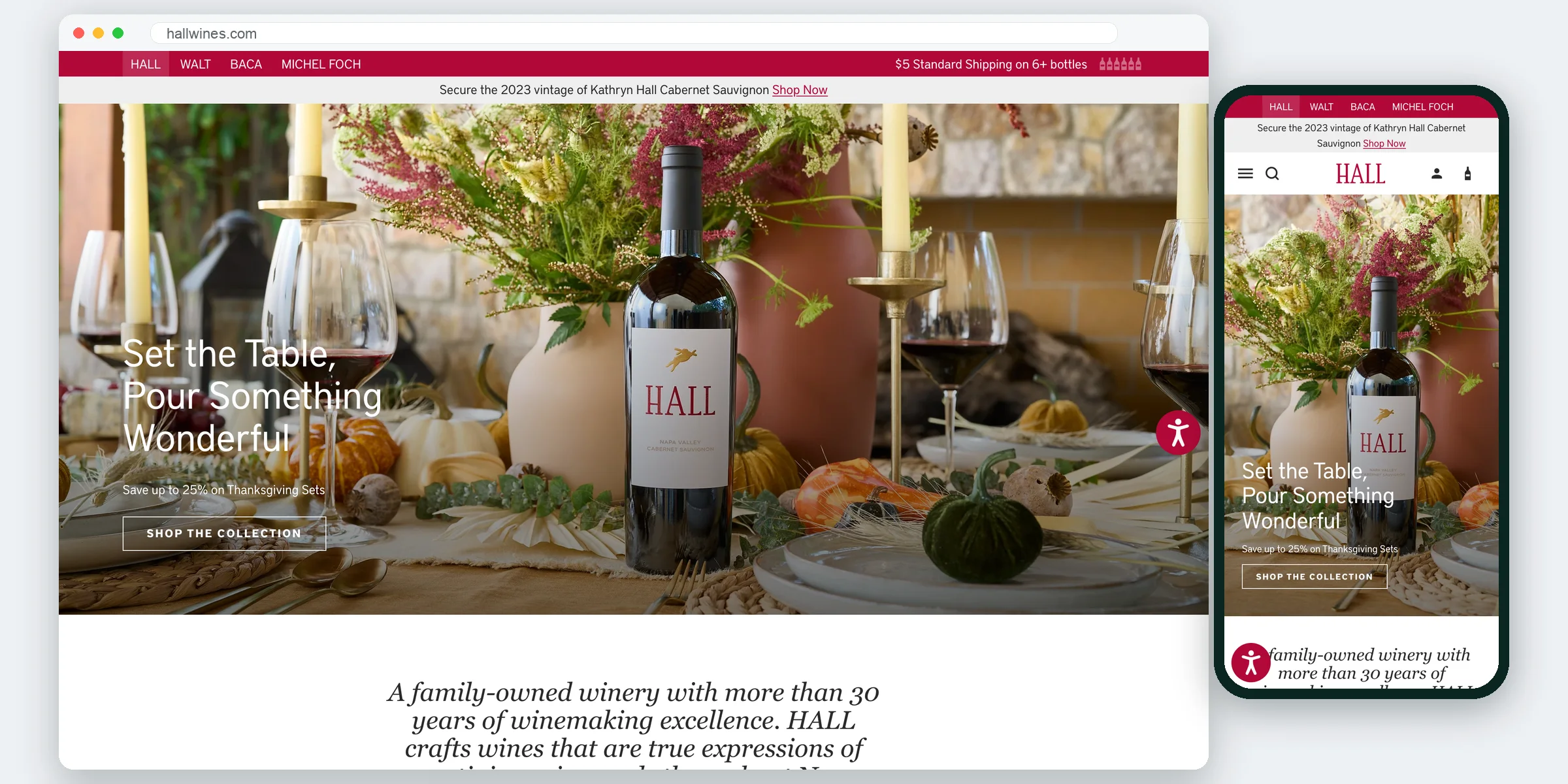
HALL’s wine shop runs on Shopify, so returning buyers can pay with Shop Pay. The membership page lists a typical shipment price and free tastings for a member and three guests. A referral earns both sides a $1 bottle.
Key takeaway: Reward referrals to turn members into advocates.
6. Tablas Creek, Paso Robles, California
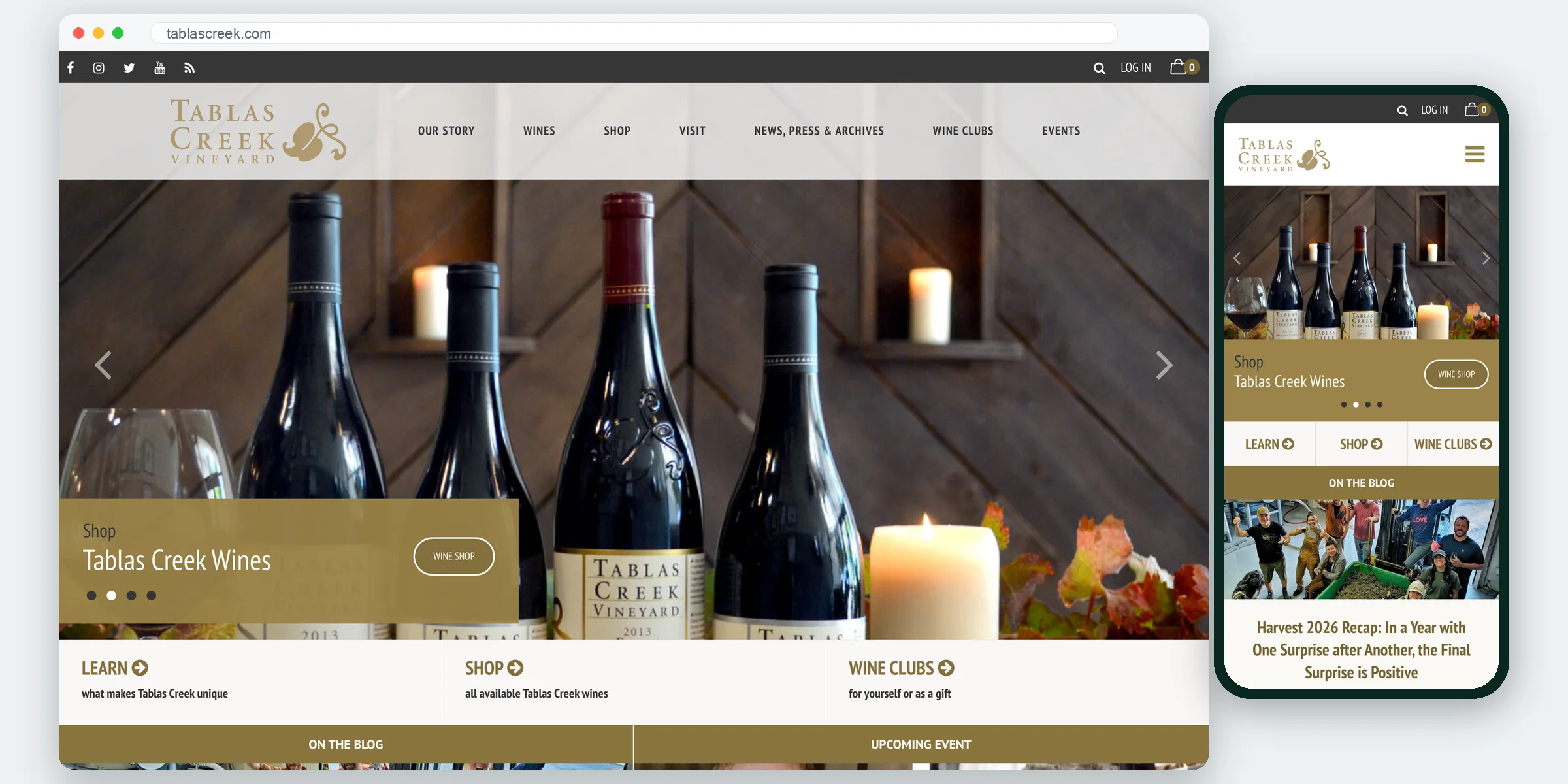
Tablas Creek offers three clear paths on the first mobile screen: Learn, Shop and Wine Clubs. Its visiting page answers planning questions in plain text, from seating times to walk-in visits.
Key takeaway: Publish visit details as page text, not PDFs or images.
7. Chateau Montelena, Calistoga, California
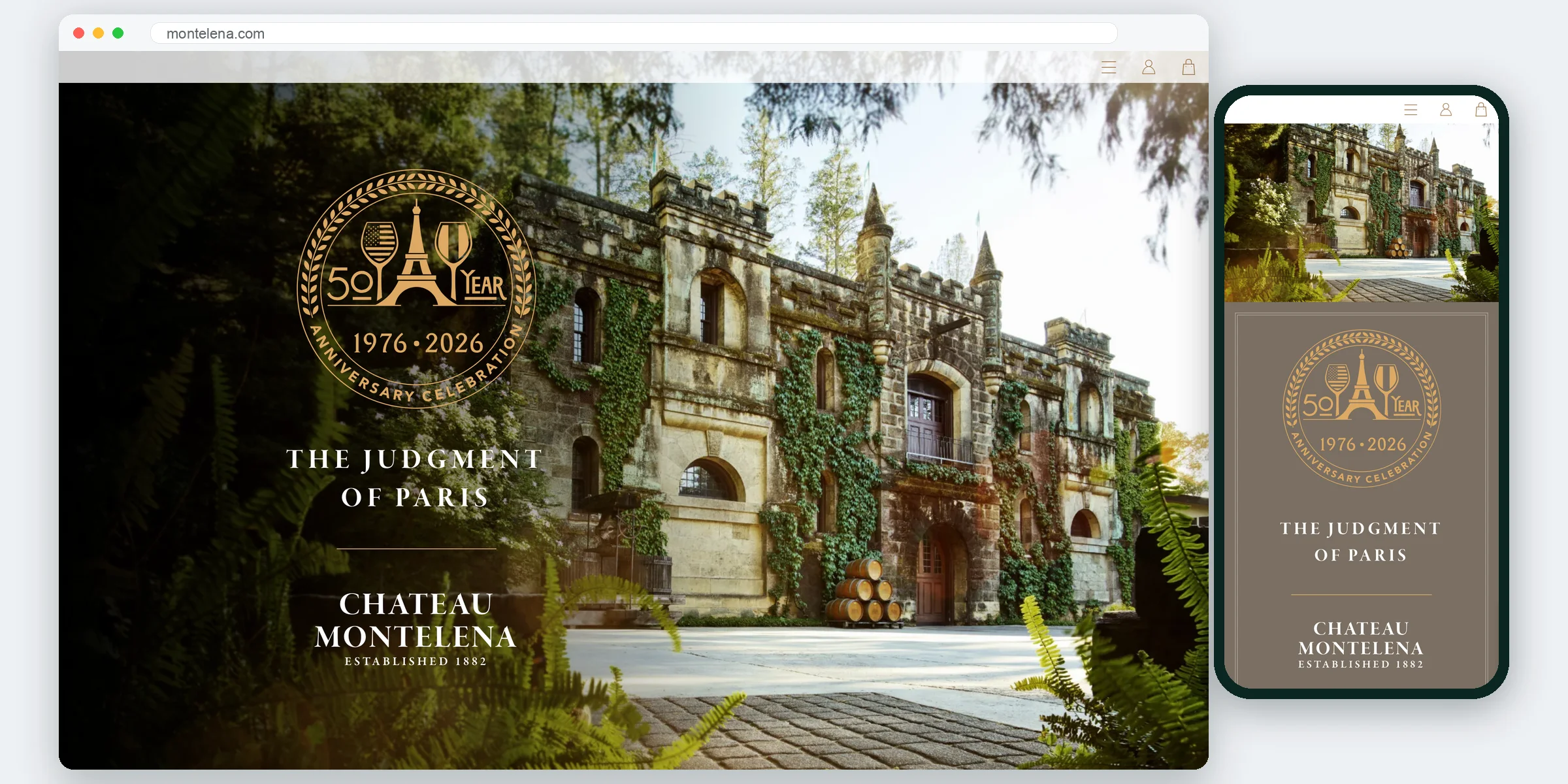
Chateau Montelena leads with its big story: 50 years since the 1976 Judgment of Paris. Its store is part of the main site, so the design holds through checkout. Membership starts with two shipments a year, an easy first step for new buyers.
Key takeaway: Lead with the story only your winery can tell.
8. Duckhorn Vineyards, Napa Valley, California
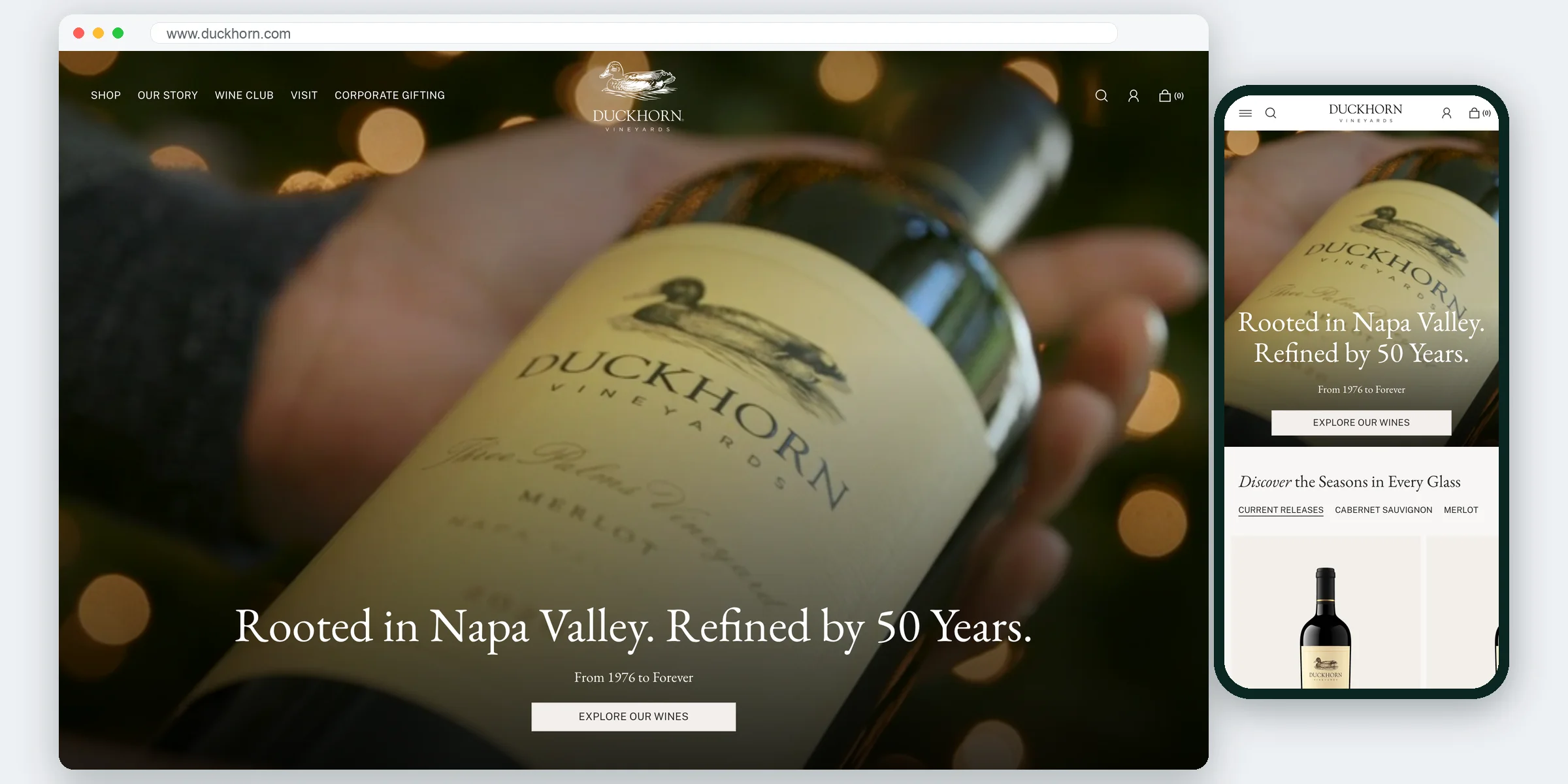
Duckhorn opens on a close-up of its label and one line: “Rooted in Napa Valley. Refined by 50 Years.” The club page answers the biggest worry first: joining is free, and members pay only for wine.
Key takeaway: Address the cost of joining in the first lines of the club page.
9. Jordan Winery, Healdsburg, California
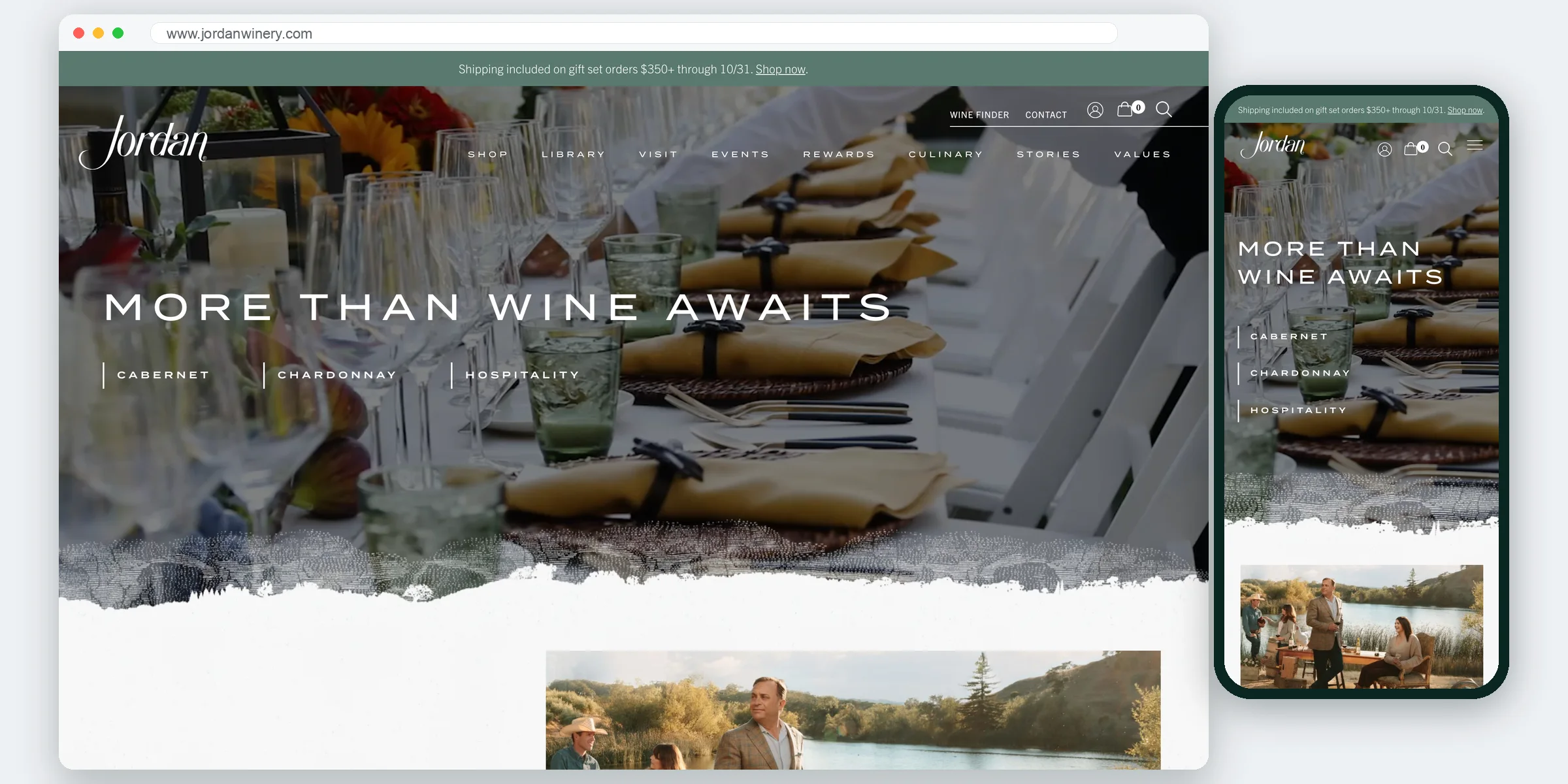
Jordan’s homepage sends visitors to Cabernet, Chardonnay or a visit in one tap. Instead of a classic club, Jordan Estate Rewards gives members points on every dollar they spend. Members trade points for experiences at the estate.
Key takeaway: Offer a loyalty program for buyers who don’t want shipments.
10. Ridge Vineyards, Santa Cruz Mountains and Sonoma County
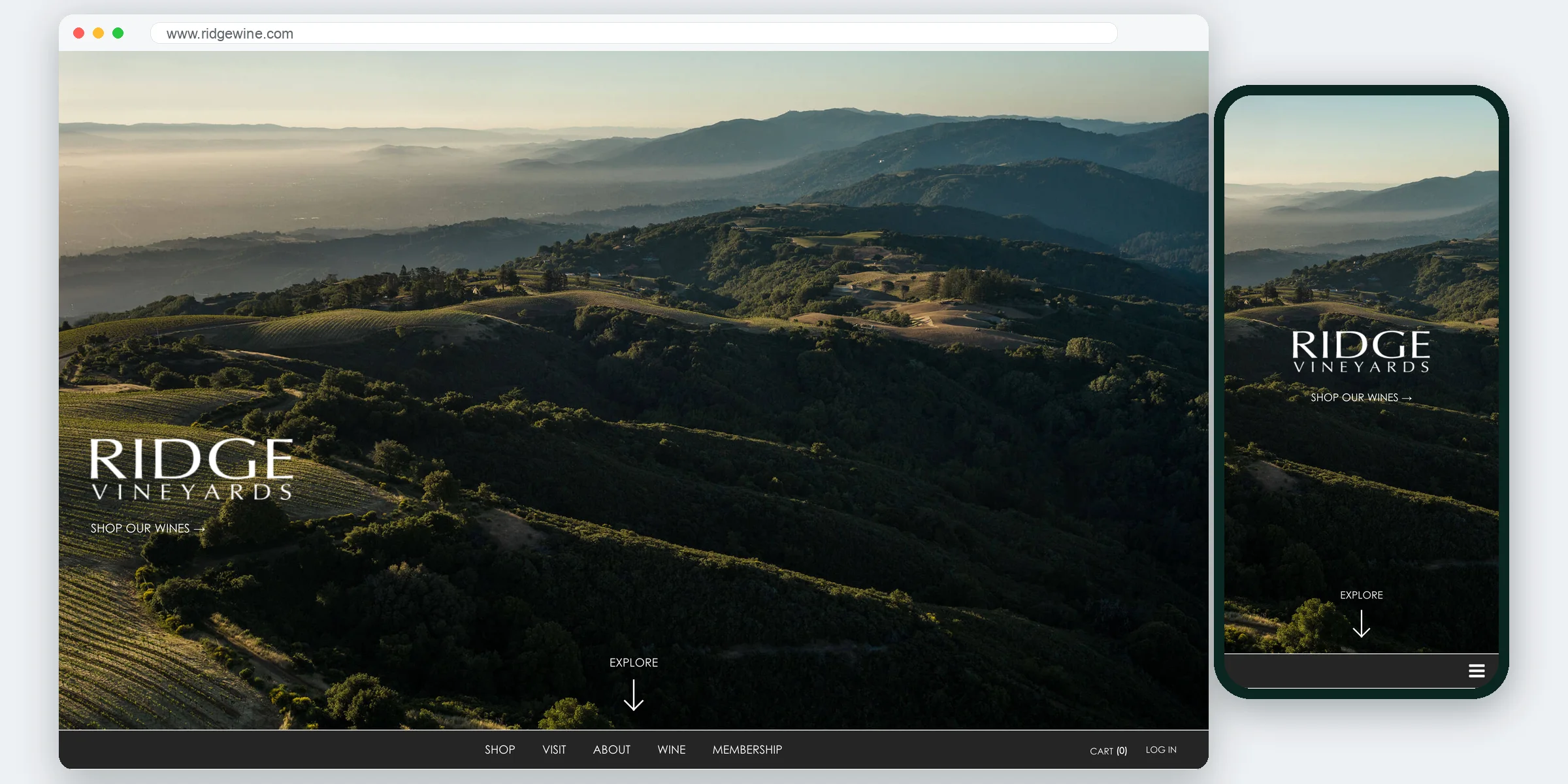
Ridge lets its setting carry the homepage: one view of the mountain vineyard and one Shop Our Wines link. Behind it sits a deep membership program that Ridge has run since 1977.
Key takeaway: Limit the homepage to one main action.
11. Scribe Winery, Sonoma, California
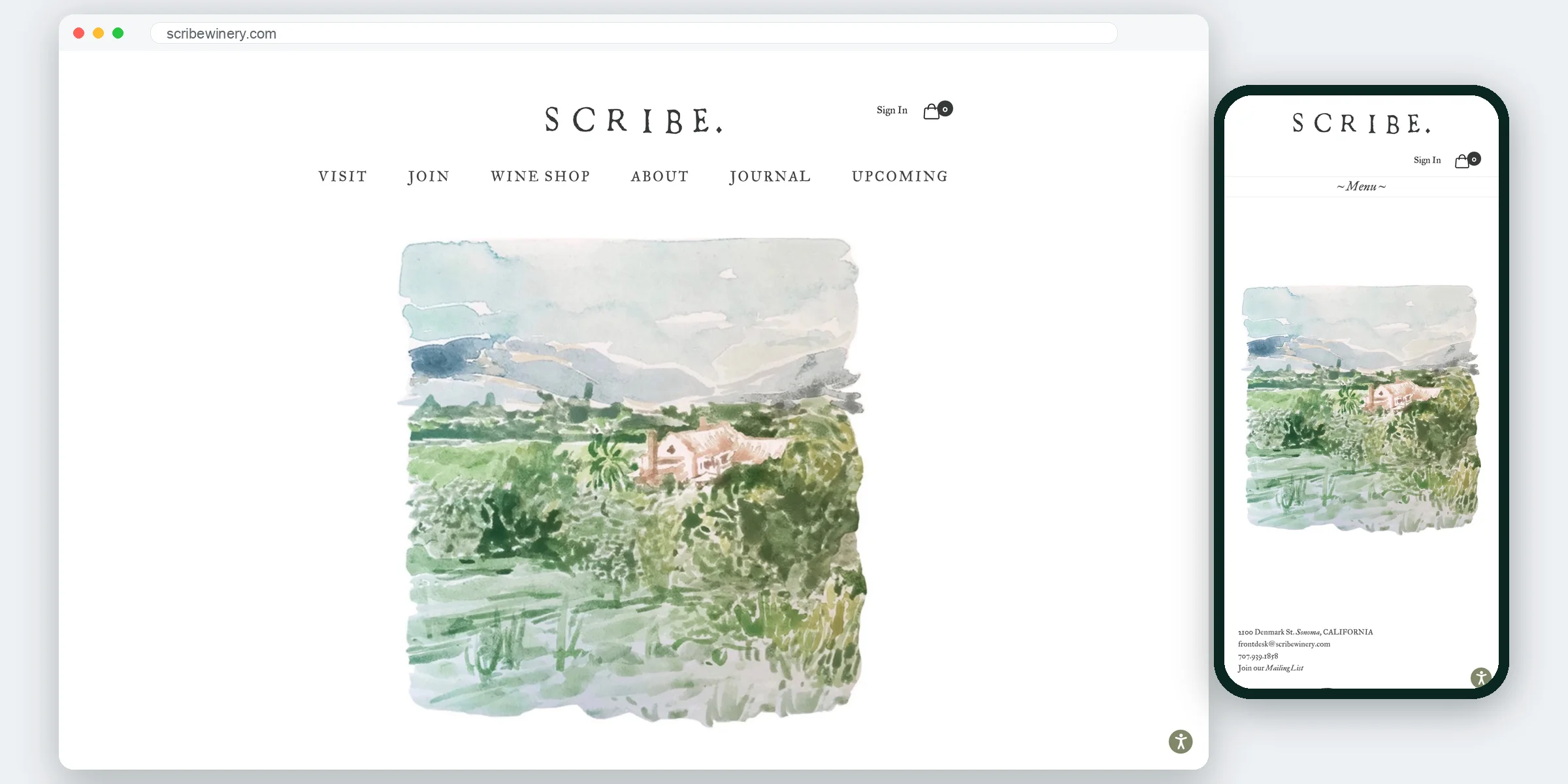
Scribe has the most distinctive look of the group: hand-painted watercolor instead of stock vineyard photos. Its club page lays out 4, 6 and 12 bottle allocations with free shipping. Guests can check out without an account.
Key takeaway: Invest in art direction no other winery could use.
12. Domaine Carneros, Carneros, Napa Valley
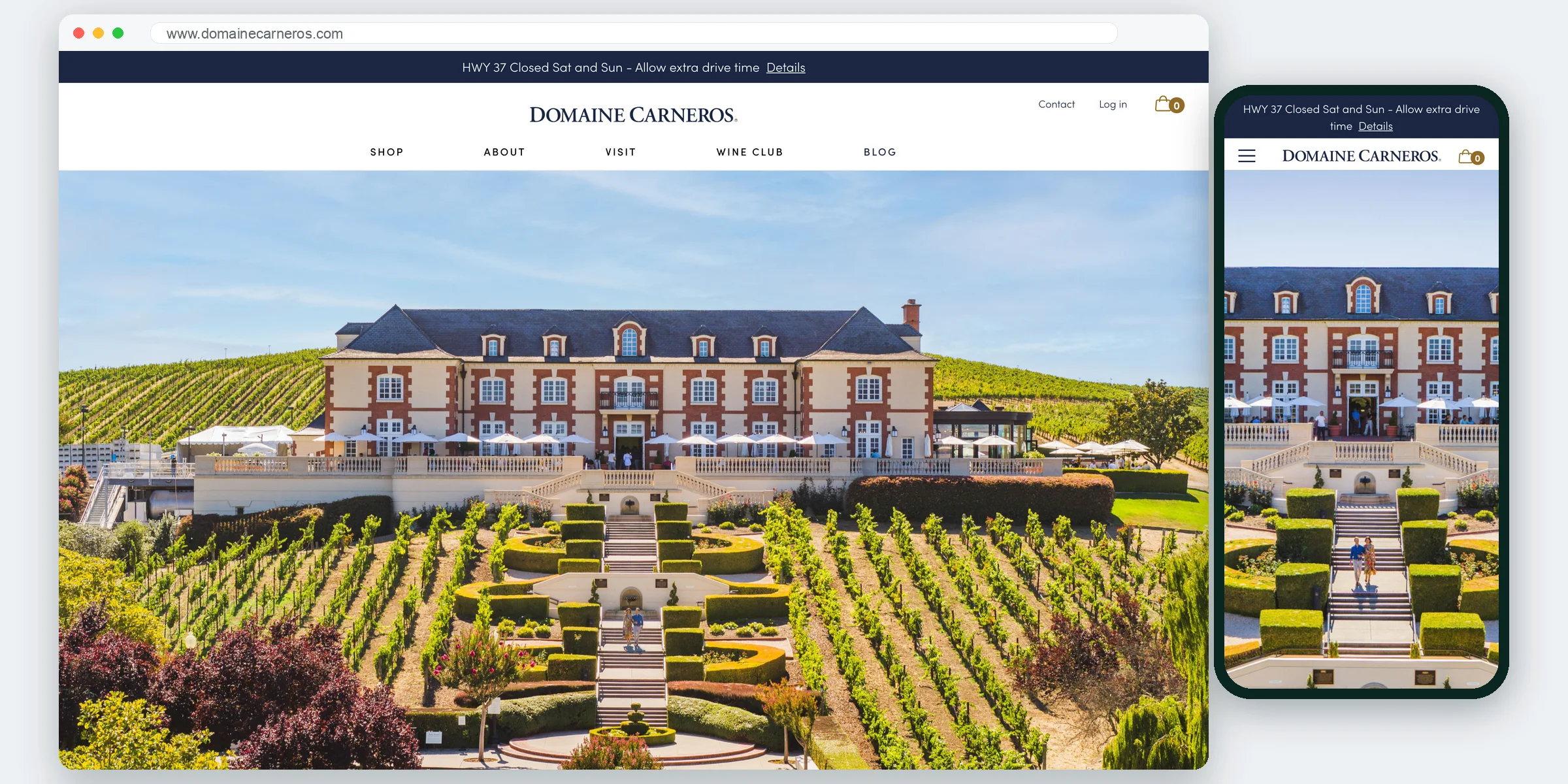
Domaine Carneros arranges its wine shop the way customers buy: sparkling, Pinot Noir, magnums and gifts. Its tasting page states price and length up front, with flights from $45 for about an hour.
Key takeaway: Organize the shop menu around how customers shop.

From our work: Argyle Winery
+108.6%
visit and tasting room pageviews
+464.1%
mobile conversion rate
+767.5%
mobile revenue
Argyle’s old site buried the Tasting House and the wine club. We brought both forward, rebuilt the navigation and made the store work on mobile. The results above are year over year.
Which platform do the best winery websites use?
Based on the code each site loads, Commerce7 runs the store and wine club on 9 of these 12 sites. HALL and Duckhorn use Shopify, and Chateau Montelena uses WooCommerce. The platform matters less than the wine website design built on top of it.
To sell wine online, start with our guide to winery ecommerce platforms. It compares pricing and fees. Our winery SEO guide shows how to get wine pages found on Google.
What should a winery fix first?
Start with the two changes that pay back fastest. Put Shop and Book a Tasting under the homepage headline. Then show the price of a typical shipment on the club page.
Frequently asked questions
What should a winery website include?
Every winery website needs an online store with a page for each wine. It also needs a wine club page with pricing and benefits, and a visit page with hours, tasting fees and online booking.
What is the best platform for a winery website?
Most of the best winery websites we reviewed use Commerce7, and a few use Shopify or WooCommerce. Choose the one that handles your wine club, wine shipping rules and tasting room sales.
Planning a new winery website? Tell us about your winery and we’ll show you where we’d start, or see how we help wineries.

Portland digital agency since 2002
Our Clients